
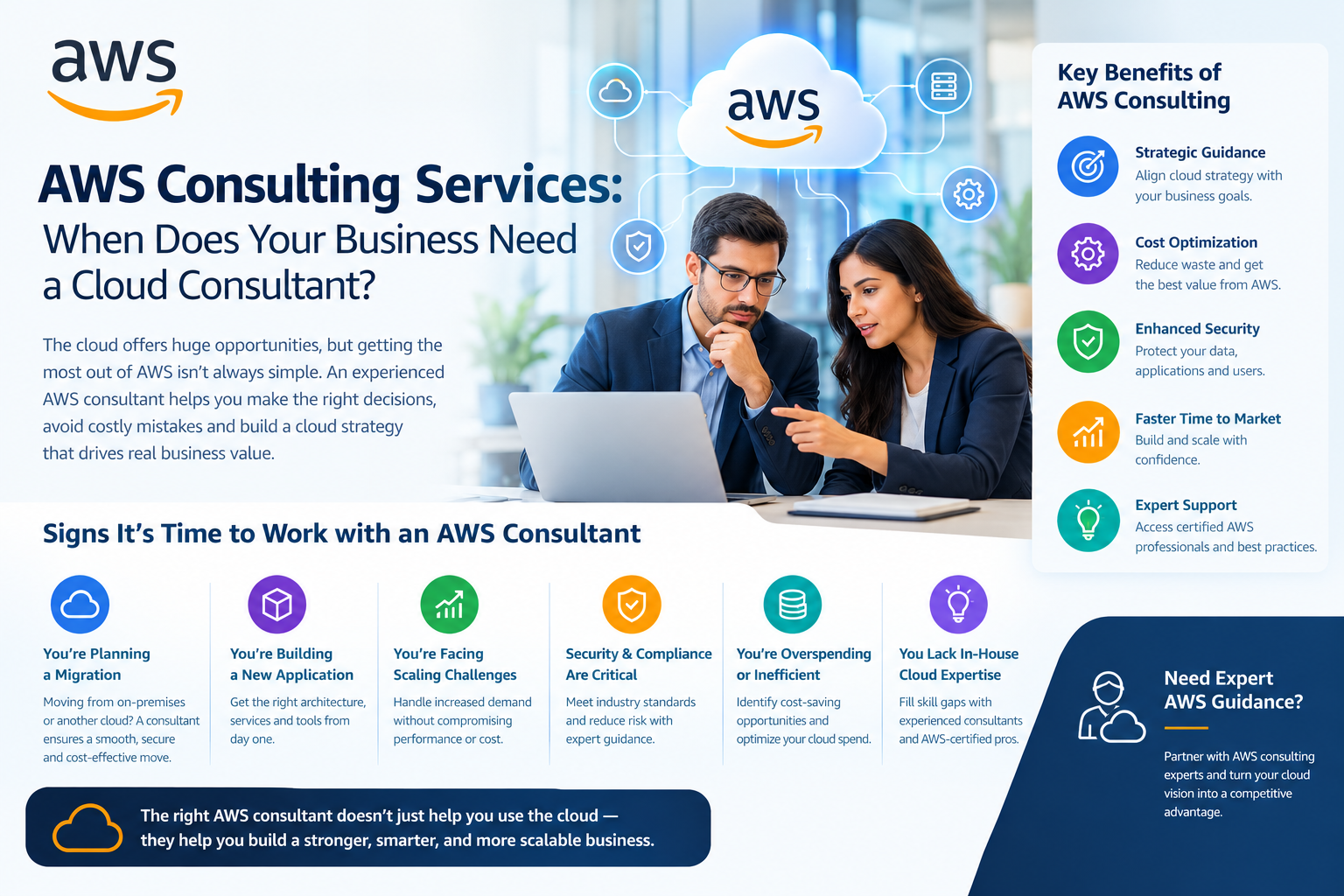
Moving business applications to AWS can improve flexibility, but managing a cloud environment requires careful planning. Companies may face rising cloud bills, application performance issues, security gaps, or unexpected problems during migration. Without the right strategy, these challenges can affect both daily operations and long-term business growth.
This is where AWS consulting services can help. An experienced AWS cloud consultant assesses existing infrastructure, identifies technical challenges, and recommends practical improvements based on business requirements. From AWS cloud migration to infrastructure optimization, the right guidance helps businesses make better decisions about their cloud investments.
Whether a company is adopting AWS for the first time or improving an existing environment, AWS cloud consulting can help align technology decisions with operational needs, security requirements, and budget goals.
Not every business needs external cloud support all the time. However, certain situations indicate that specialist guidance could save time, reduce risk, and improve results.
1. Your AWS Cloud Costs Keep Increasing
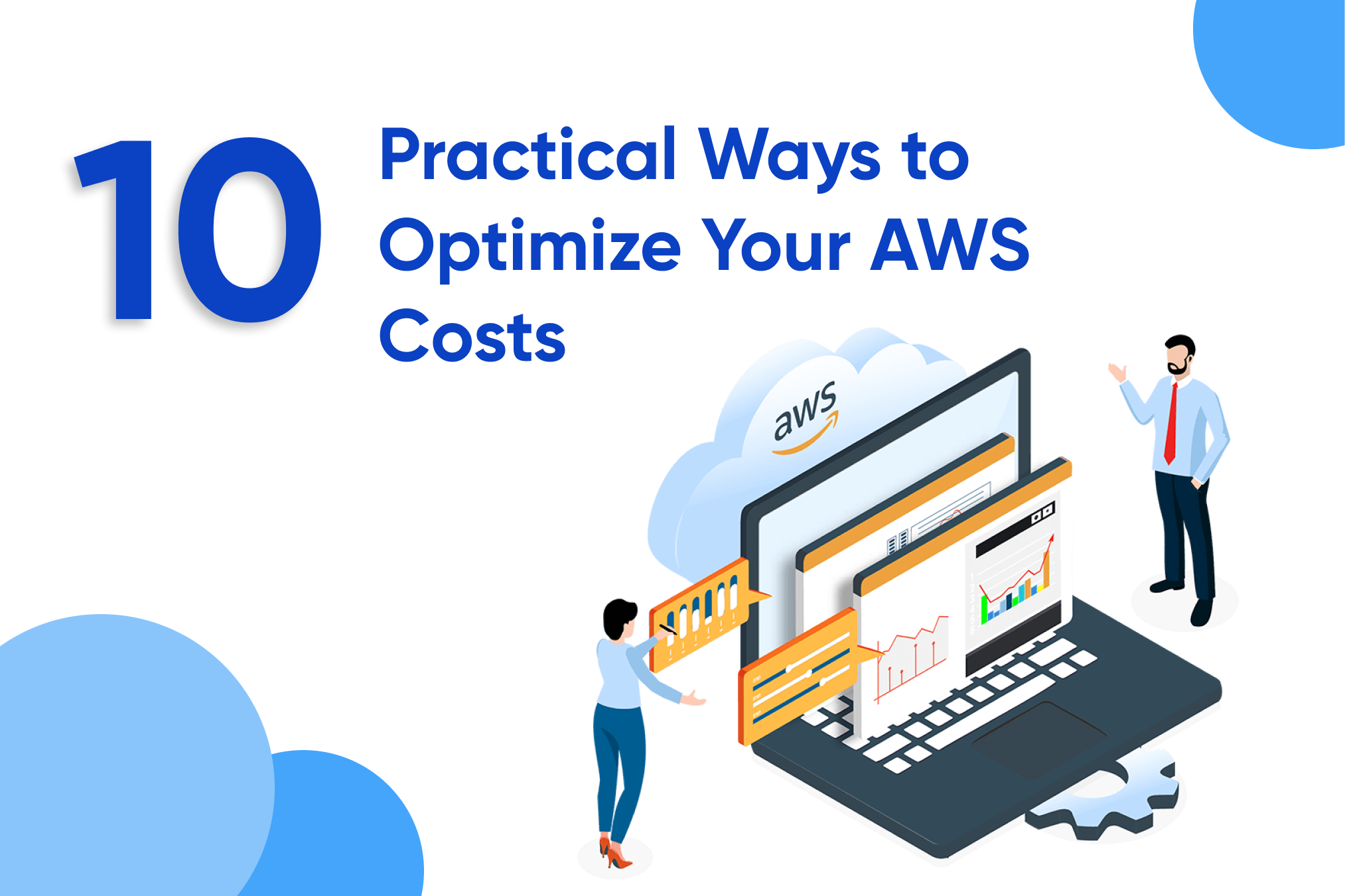
AWS spending can grow as businesses add computing resources, databases, storage, and other cloud services. The problem often starts when resources remain underused or teams lose track of what different applications actually need.
AWS cost optimization services help businesses review cloud usage, identify unnecessary expenses, and assess whether resources are appropriately sized. A consultant may also examine pricing options and resource schedules to find opportunities for savings.
The aim of AWS cost management is not simply to reduce spending. It is to make sure every cloud resource provides value without affecting performance, security, or reliability.
2. You Are Planning an AWS Cloud Migration
Moving applications from on-premises infrastructure or another cloud provider requires more than transferring files and databases. Businesses must consider application dependencies, network design, data protection, testing, downtime, and migration timelines.
Professional AWS cloud migration services can help organizations assess their existing systems and select a suitable migration strategy. Depending on the workload, this may involve moving applications with minimal changes, modifying them for AWS, or redesigning parts of the architecture.
An experienced consultant can also help create a migration roadmap, plan testing activities, and identify risks before they affect business operations.
3. Your Applications Have Performance or Reliability Issues
Slow applications, frequent outages, and inconsistent response times can frustrate users and affect revenue. Increasing server capacity may appear to be an easy solution, but it does not always address the underlying problem.
AWS infrastructure consulting can help investigate issues involving computing resources, database performance, network configuration, and application dependencies.
A consultant may recommend changes to resource sizing, monitoring, architecture, or deployment practices. These improvements can help businesses maintain more reliable applications while avoiding unnecessary infrastructure expenses.
4. Your AWS Security Needs Have Changed
As cloud environments grow, managing user permissions, protecting sensitive data, and monitoring activity can become more complicated. A configuration that worked for a small environment may no longer be suitable for a larger organization.
AWS security consulting helps businesses review access permissions, encryption settings, network exposure, logging, and other relevant controls.
A cloud consultant can identify potential weaknesses and recommend improvements based on the organization's risk profile. Regular reviews are especially useful for businesses handling sensitive customer information or operating under industry-specific security requirements.
The scope of AWS consulting services depends on the company's goals, existing infrastructure, and internal technical skills. Some businesses need help with one project, while others require broader guidance for their cloud strategy.
Common areas of support include:
Businesses should choose services based on their actual challenges rather than paying for a broad package they may not need.
Hiring an external consultant is not always the only option. If your existing team has strong AWS knowledge and enough time, internal training may be sufficient for routine cloud management.
However, AWS consulting can be useful when a project requires specialist knowledge, an independent architecture review, or support that the internal team cannot provide within the required timeframe.
For example, a company preparing to migrate a business-critical application may need an expert to assess the migration risks and design the target architecture. An organization with an established cloud team might only need help with a complex security review or cost optimization project.
Many businesses use a combination of both approaches. External consultants provide guidance for specific challenges, while internal engineers manage daily operations and build their knowledge through the process.
Selecting an AWS consulting company involves more than comparing prices. The right partner should understand your technical environment, explain its recommendations clearly, and connect its work to measurable business outcomes.
Consider these factors before making a decision:
A reliable AWS cloud consulting partner should help your business make informed decisions rather than recommend unnecessary complexity.
You do not need a complete technical assessment before contacting a consultant. However, sharing your main challenges and business goals can make the initial discussion more productive.
Start by identifying the problem you want to solve. This could be increasing AWS costs, a planned cloud migration, recurring outages, or concerns about security and compliance.
If available, gather AWS billing reports, architecture diagrams, application requirements, performance data, and recent incident records. Never share passwords, access keys, or other secrets through ordinary documents.
It is also helpful to define what success means. For example, your goal may be to improve application availability, complete a migration within a planned period, or gain better visibility into cloud spending.
Clear objectives help consultants recommend appropriate solutions and allow your business to evaluate the results.
The best time to seek AWS consulting services is often before a major technical problem becomes an urgent business issue.
Consider external support when preparing for a cloud migration, expanding your AWS environment, reviewing infrastructure security, or investigating unexplained spending. Consulting can also help when your existing architecture no longer supports application demands.
Not every situation requires a long-term engagement. A focused AWS infrastructure assessment or architecture review may be enough to identify weaknesses and establish an improvement plan.
The key is to recognize when the complexity of your cloud environment exceeds the time, expertise, or resources available within your organization.
AWS provides a wide range of cloud services, but choosing and managing them effectively requires a clear understanding of business priorities. Poor planning can lead to unnecessary costs, security risks, and infrastructure that becomes difficult to maintain.
With the right AWS consulting services, businesses can improve cloud architecture, plan migrations, manage costs, and strengthen infrastructure security. The value comes from addressing specific problems with practical recommendations rather than adding technology without a clear purpose.
Goognu can be considered when exploring cloud consulting and infrastructure support for your business. Start by identifying your main AWS challenges, defining your goals, and determining which areas need expert attention.
A well-planned cloud strategy helps businesses use AWS more effectively today while preparing their infrastructure for future requirements.








 India

 Canada
 United Kingdom
 New Zealand
 USA
 UAE
 SGP
 Australia
 CALL
NOW