
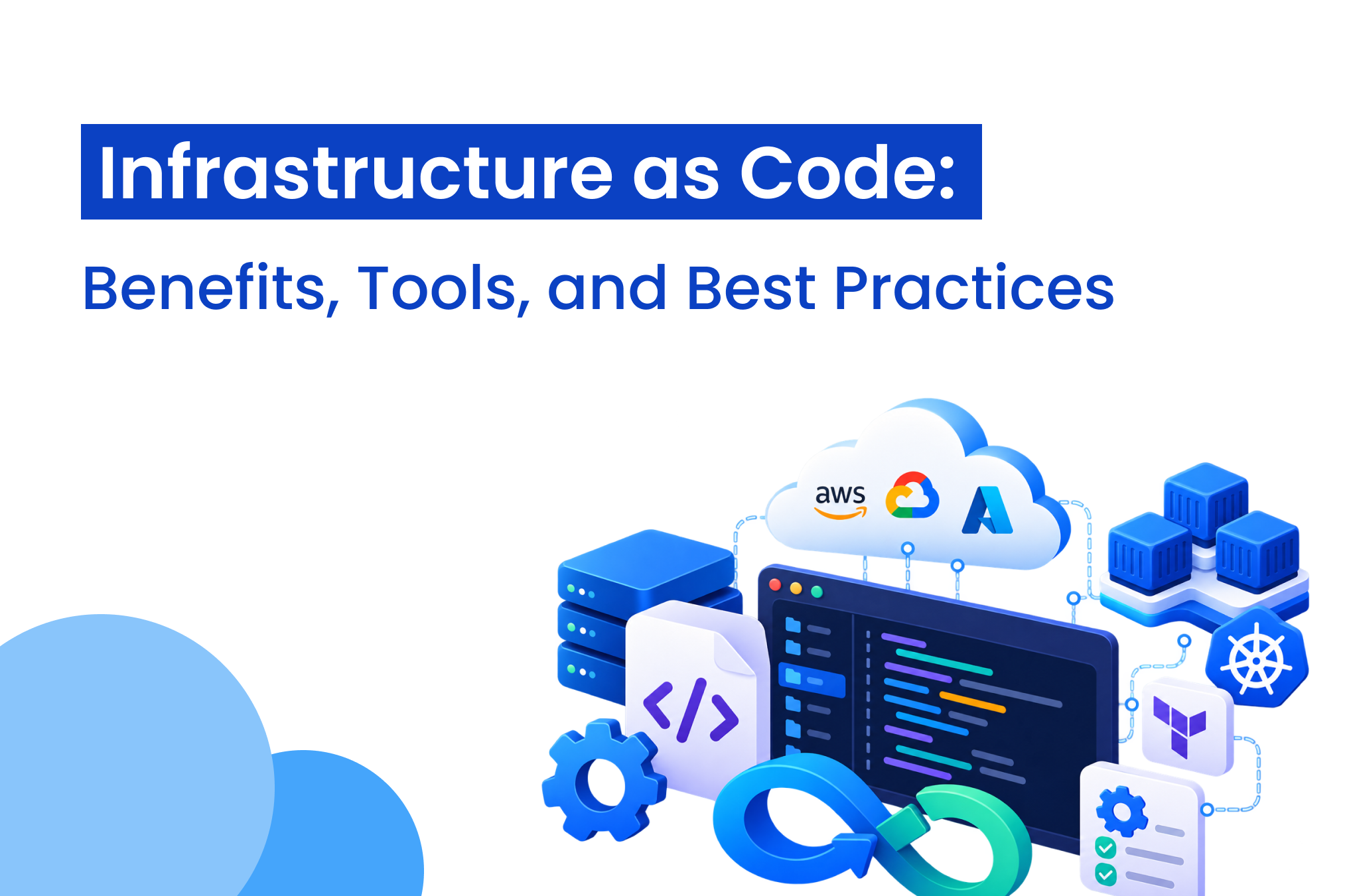
Managing cloud infrastructure manually can become difficult when a business operates multiple applications, environments, and services. Creating servers, configuring networks, assigning permissions, and maintaining resources requires time and careful coordination. Even a small configuration mistake can affect application performance or create security concerns.
Infrastructure as Code (IaC) offers a structured way to manage infrastructure through code instead of relying only on manual processes. Teams can define their infrastructure requirements in configuration files, review changes, and use automation to create or update cloud resources.
As cloud adoption continues to grow in 2026, Infrastructure as Code is helping organizations improve consistency, reduce repetitive work, and manage infrastructure more effectively.
Infrastructure as Code is an approach in which infrastructure resources are created and managed using machine-readable configuration files. These files describe the desired setup, including computing resources, networks, storage, security settings, and other cloud services.
Instead of manually configuring every resource through a cloud provider’s dashboard, teams can use code to define how an environment should be built.
This approach provides a repeatable process for managing infrastructure across development, testing, and production environments.
For example, a team can define the requirements for a virtual machine, its network connection, storage capacity, and access permissions in a configuration file. The IaC tool then uses that definition to create the required resources.
Infrastructure changes can also be reviewed, tested, and tracked through version control systems such as Git.
Manual infrastructure management becomes harder as environments grow. Different team members may follow different processes, which can result in inconsistent configurations and unexpected differences between environments.
IaC helps organizations create a more controlled approach.
Some of its key benefits include:
These benefits depend on proper implementation. Poorly managed configuration files or unrestricted automation can still create operational and security risks.
Terraform is one of the widely used tools for defining and managing infrastructure through code. It allows teams to describe resources using configuration files and apply those configurations to supported cloud and infrastructure providers.
Terraform automation can support tasks such as creating virtual machines, configuring networks, managing databases, and setting up cloud services.
A typical Terraform process includes:
Terraform’s planning process gives teams an opportunity to identify unwanted changes before applying them. Its configuration-based approach also helps organizations maintain a common process across different environments.
However, teams should manage state files carefully, protect sensitive information, and control who can approve or apply infrastructure changes.
Different organizations select tools according to their cloud providers, technical skills, infrastructure requirements, and existing workflows.
IaC tools commonly used in cloud environments include Terraform, AWS CloudFormation, Azure Bicep, and Pulumi. Each tool has its own features, configuration methods, and integration options.
Terraform is often used for managing resources across different infrastructure providers. AWS CloudFormation is designed for AWS environments, while Azure Bicep supports infrastructure deployment within Microsoft Azure.
Pulumi allows teams to define infrastructure using familiar programming languages, depending on the supported setup.
The right tool is not always the one with the most features. Businesses should consider how easily a tool fits into their existing development process, security standards, deployment workflows, and team expertise.
Effective infrastructure management requires more than creating cloud resources. Teams must also monitor configurations, manage updates, review permissions, control costs, and remove resources that are no longer required.
IaC can support these activities by keeping infrastructure definitions in a central and reviewable format.
When a resource needs to be updated, teams can modify the configuration and review the proposed changes before applying them. This makes infrastructure work more transparent than undocumented manual updates.
Organizations can also use reusable modules or templates for common infrastructure requirements. These resources help teams follow established standards while reducing repeated configuration work.
Regular reviews are still necessary because infrastructure code can become outdated as applications, security requirements, and cloud services change.
A successful IaC strategy requires clear processes and ongoing maintenance. The following practices can help businesses manage infrastructure more reliably.
Store Infrastructure Code in Version Control
Infrastructure configuration files should be maintained in a version control system. This allows teams to track changes, review updates, and access previous versions when required.
Repositories should also include clear documentation so that team members understand how the configurations work.
Review Changes Before Deployment
Infrastructure changes can affect application availability, security, and costs. Teams should use a review process before applying updates to important environments.
Code reviews and approval requirements can help identify mistakes before they impact production systems.
Use Reusable Modules and Templates
Reusable modules can reduce repeated work and encourage consistent configurations. Teams should create modules that are easy to understand, maintain, and update.
However, modules should not become unnecessarily complicated. Their purpose should be to simplify common infrastructure tasks.
Protect Secrets and Sensitive Information
Credentials, access keys, and other sensitive details should not be stored directly in publicly accessible configuration files.
Businesses should use suitable secrets management solutions and apply strict access permissions. Sensitive information should also be protected in state files and automated pipelines.
Test Infrastructure Changes
Infrastructure code should be tested before it is applied to production. Testing may include configuration validation, security checks, policy reviews, and plan analysis.
Automated testing can help identify invalid settings and reduce the possibility of unexpected infrastructure changes.
Automated provisioning can make it easier to create resources, but it can also lead to unnecessary spending if resources are not reviewed.
Teams should monitor cloud usage, remove unused resources, and apply cost controls where appropriate. Infrastructure definitions should reflect current business requirements.
Security needs to be included throughout the infrastructure lifecycle. A configuration may work correctly from a technical perspective but still expose unnecessary ports, assign excessive permissions, or create an insecure network setup.
Organizations should include security checks in their IaC workflows. Policy tools and automated scans can help identify common configuration problems before deployment.
Access should also be limited according to responsibilities. Not every team member needs permission to modify production infrastructure.
By combining Infrastructure as Code with security reviews, identity controls, and monitoring, businesses can create a stronger foundation for cloud operations.
Although IaC provides several benefits, adoption can create challenges. Teams may need time to learn new tools, redesign existing workflows, and convert manually managed infrastructure into code.
Configuration conflicts, state management issues, incorrect dependencies, and poorly planned changes can also cause problems.
Organizations can reduce these challenges by starting with a limited project, documenting processes, training employees, and introducing approval controls gradually.
It is also important to assign clear ownership. Someone should be responsible for maintaining infrastructure code, reviewing updates, and handling issues related to automated deployments.
Cloud environments are becoming more complex, and organizations need reliable ways to manage infrastructure across applications and platforms. Infrastructure as Code supports this requirement by making infrastructure definitions repeatable, reviewable, and easier to automate.
In 2026, IaC is increasingly connected with DevOps workflows, security checks, policy management, and cloud cost monitoring. These integrations can help businesses improve control while reducing repetitive operational work.
However, successful IaC adoption depends on more than selecting a tool. Organizations need well-maintained code, secure processes, proper testing, and clear responsibilities.
When implemented thoughtfully, Infrastructure as Code helps businesses manage cloud resources with greater consistency and visibility. It creates a foundation for efficient infrastructure management while supporting the changing needs of modern cloud-native applications.









 India
India

 Canada
 United Kingdom
 New Zealand
 USA
USA
 UAE
UAE
 SGP
SGP
 Australia
 CALL
NOW
CALL
NOW