
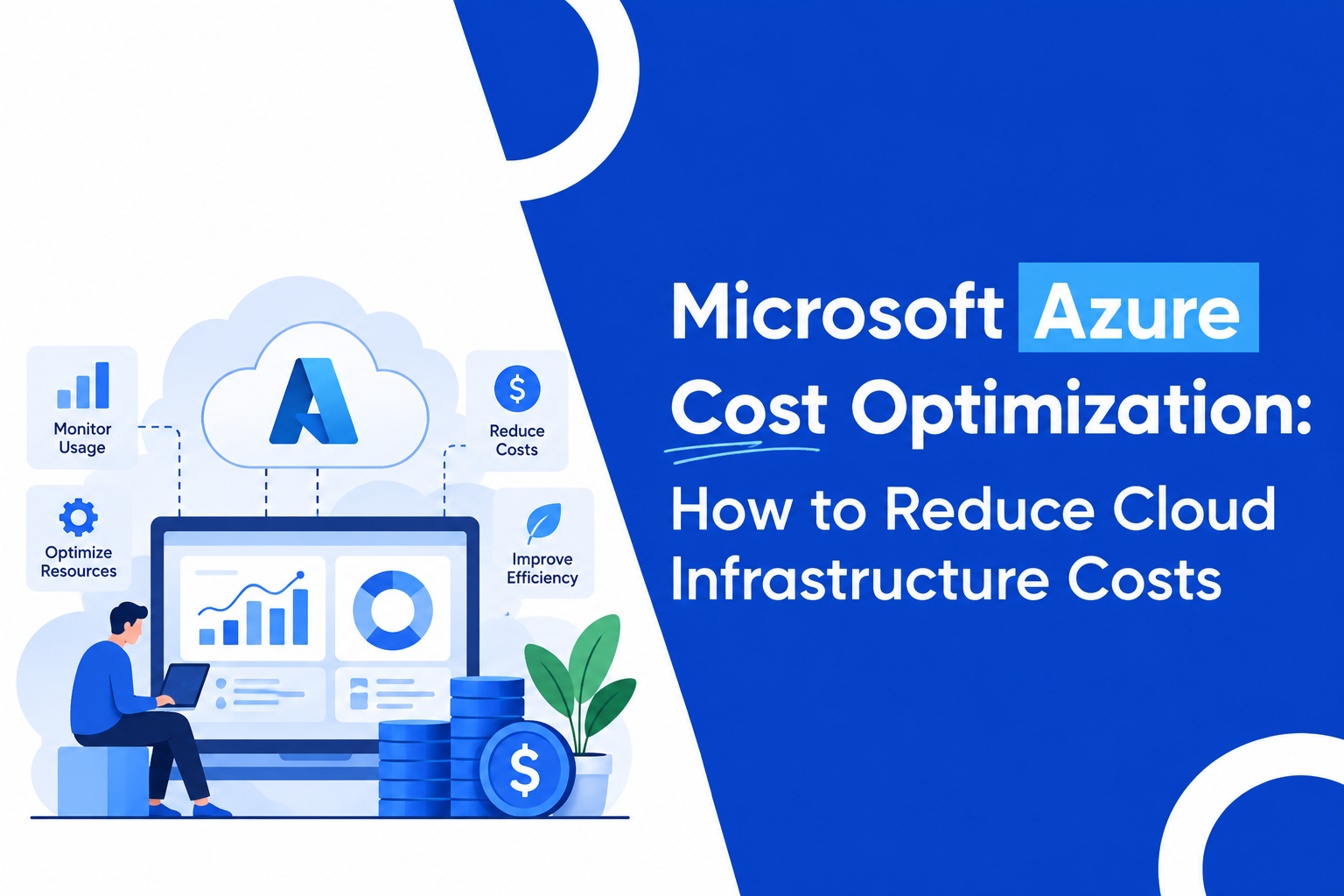
Here's a pattern that plays out in businesses of every size. In January, the team cleans up the Azure environment, resizes a few oversized virtual machines, and celebrates a nice drop in the monthly bill. By June, without anyone really noticing, the bill had crept right back up to where it started.
This isn't because the earlier work failed. It's because cloud environments never stay still. New projects launch, temporary test environments get forgotten, and usage patterns shift constantly. Real Azure cost optimization isn't a one time cleanup. It's an ongoing habit that keeps your spending matched to what your business actually needs, month after month.
This blog covers the practical strategies that make that possible, without requiring a huge team or a complicated toolset.
Before looking at fixes, it helps to understand why this keeps happening. Most Azure environments start out reasonably clean. Then new applications launch, additional resources get spun up to support them, and temporary environments meant to last a few weeks somehow stay active for months.
Nobody does this on purpose. It happens because cloud resources are easy to create and easy to forget. Add to that a common ownership gap, where engineering teams manage the infrastructure but finance ends up paying the bill, and it becomes clear why so many businesses keep rediscovering the same waste year after year.
The fix isn't a single big cleanup. It's building cost awareness into how your team already works.
Azure includes two free tools that form the foundation of any solid cost strategy. Cost Management and Billing shows you exactly where your spending is going, broken down by resource, project, or department. Azure Advisor goes a step further, actively recommending specific ways to reduce cost based on your actual usage patterns.
These tools won't fix anything on their own. Someone on your team needs to actually review the recommendations and act on them. But checking in regularly, even just once a month, gives you a real chance to catch waste early instead of discovering it three months later on an invoice.
One of the most common and easiest to fix sources of waste is virtual machines that are simply bigger than they need to be. This usually happens early on, when teams size resources for peak demand just to be cautious, and then never revisit that decision as actual usage becomes clear.
Right sizing means regularly comparing your virtual machine sizes against actual usage and adjusting downward where there's obvious room. This single habit alone often uncovers meaningful savings, especially in environments that have grown quickly without much oversight.
If your business already owns Windows Server or SQL Server licenses, this is one of the most underused savings opportunities available on Azure. Azure Hybrid Benefit lets you apply your existing licenses toward Azure resources, cutting costs significantly compared to paying for licensing again through Azure directly.
This advantage doesn't apply to every business, but for organizations already invested in Microsoft's ecosystem, it can meaningfully lower the overall cost of running workloads on Azure, sometimes by a large margin.
Azure offers several ways to pay for the same resource, and picking the right one for each workload matters more than most teams realize.
For workloads that run continuously and aren't going away anytime soon, Reserved Instances or Azure Savings Plans offer significant discounts in exchange for committing to a set usage level over one or three years. For workloads that can tolerate interruptions, like batch jobs or background processing, Spot VMs offer some of the steepest discounts available, since they use Azure's unused capacity.
Most businesses end up using a mix of these, matching each workload to the pricing model that fits its actual usage pattern rather than defaulting to standard pay as you go pricing across the board.
Not all your data needs to sit in expensive, instantly accessible storage. Azure offers different storage tiers, from hot storage meant for frequently accessed data, to cool and archive tiers built for information you rarely touch, like backups or old records.
Setting up lifecycle policies lets Azure automatically move data to a cheaper tier as it ages, or delete it entirely once it's no longer needed. This removes the need for someone to manually track and manage aging files, while quietly keeping your storage costs from creeping up over time.
This is an area many businesses underestimate until it shows up as a surprisingly large line item. Moving data out of Azure, especially across regions or to services outside Azure entirely, comes with its own charges that can add up quickly for businesses with high traffic or a global user base.
Reviewing your network architecture to reduce unnecessary data movement, and using tools like content delivery networks to serve content closer to your users, can meaningfully cut these costs while often improving performance at the same time.
If your team runs workloads on Azure Kubernetes Service, costs can grow quickly if clusters aren't actively managed. Oversized node pools, inefficient scheduling, and clusters that don't scale down during quiet periods are common and often invisible sources of waste.
Setting up autoscaling so your cluster adjusts to real demand, combined with periodically reviewing how efficiently workloads are packed onto available nodes, can lead to real savings without hurting performance or reliability.
This might be the most important strategy on this list, and it's the one most businesses skip. Tools and discounts only work if someone is actually paying attention to them consistently.
Assigning clear ownership, so that specific teams or projects are responsible for their own cloud costs rather than treating it as one shared, faceless IT expense, makes a real difference. When a team can see exactly what their own usage costs, they naturally start making more cost conscious decisions, without needing constant oversight from finance or leadership.
Tagging resources by project, department, or environment makes this kind of accountability possible, and it's a small setup step that pays off continuously over time.
Azure cost optimization isn't about a single dramatic fix. It's a combination of small, consistent habits, checking your usage regularly, matching pricing models to actual workload patterns, taking advantage of discounts you already qualify for, and making sure someone genuinely owns the responsibility of watching costs over time.
Start with the easiest wins, reviewing Azure Advisor recommendations and right sizing obvious over provisioned resources, then build toward the bigger structural changes like Reserved Instances, Hybrid Benefit, and Kubernetes tuning. Done consistently, these steps keep your Azure bill honest, and free up budget for the parts of your business that actually need it.
If managing this across a growing Azure environment feels like more than your team can keep up with, working with a team experienced in Azure infrastructure and cost management can help you build lasting habits instead of chasing the same savings year after year.










 India
India

 Canada
 United Kingdom
 New Zealand
 USA
USA
 UAE
UAE
 SGP
SGP
 Australia


 CALL
NOW
CALL
NOW