
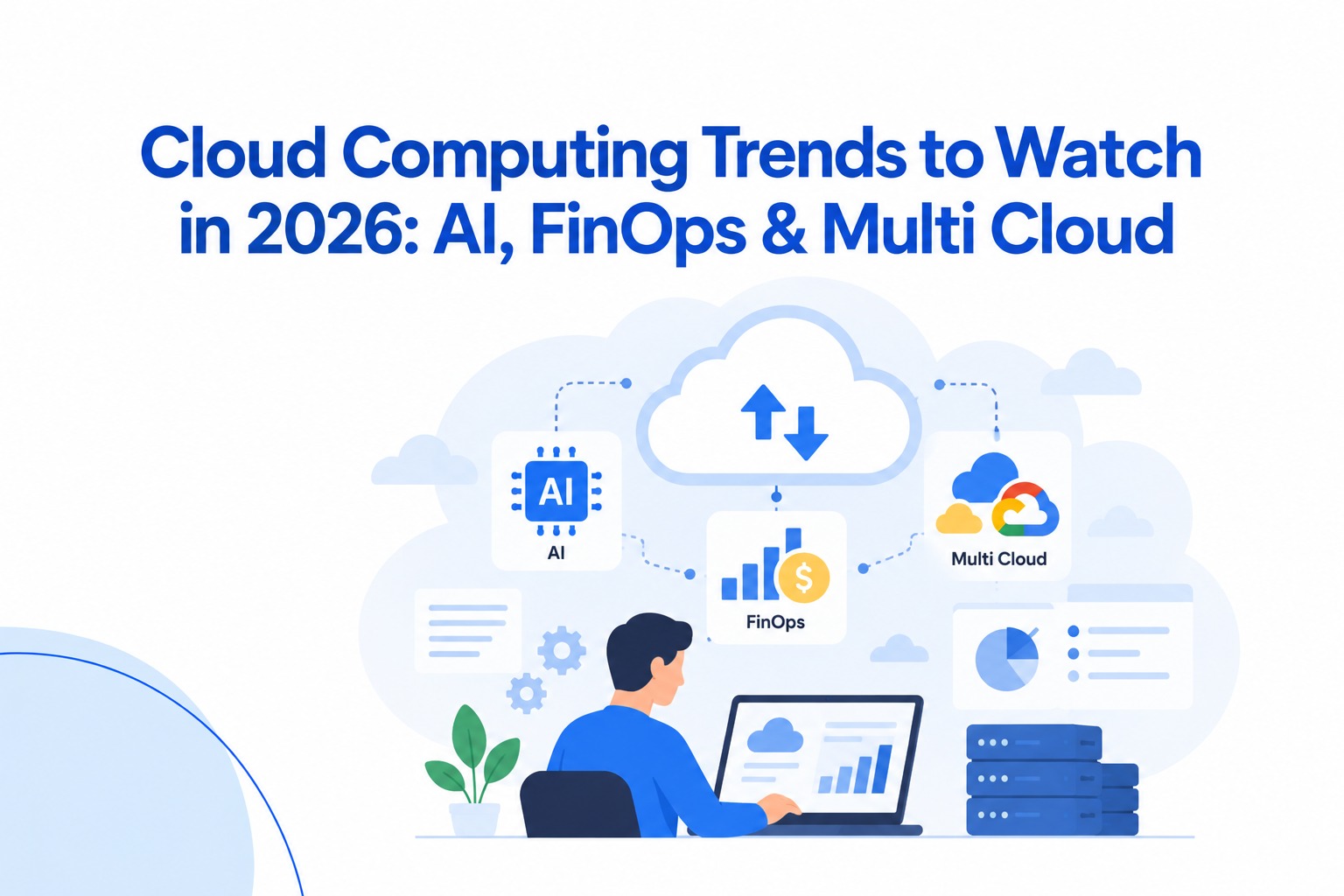
Cloud computing is not new anymore. Almost every company, big or small, already uses it in some form. But the way businesses use the cloud is changing fast. In 2026, the conversation has moved away from "should we move to the cloud" to "how do we get more value from the cloud we already have." That shift is exactly what makes this year different.
If you are planning your technology budget or trying to understand where the industry is heading, knowing the cloud computing trends 2026 can help you make smarter decisions. This blog breaks down the three biggest shifts happening right now: AI becoming part of the cloud itself, FinOps turning into a serious business discipline, and multi cloud setups becoming the new normal.
For years, the main goal of moving to the cloud was simple: scale up when you need more power, scale down when you don't. That part still matters, but it is no longer the whole story.
Now, businesses are asking harder questions. Are we spending too much on cloud resources we don't use? Are we stuck with one provider and paying more because we have no other choice? Can our systems actually support the AI tools we want to build?
These questions are shaping the cloud computing trends 2026, and they are pushing companies to rethink how they manage their cloud environment, not just where it lives.
A few years ago, companies had to build their own AI setup from scratch. That meant buying expensive hardware, hiring specialized staff, and waiting months before anything worked properly.
That is changing. Cloud providers now offer AI tools and computing power as a ready to use service. Businesses can rent the exact amount of AI processing power they need, use it, and pay only for what they use. This is often called AI as a Service, and it is quickly becoming a standard offering rather than a special feature.
This matters because it removes a huge barrier. A small business no longer needs a massive budget to experiment with AI. They can test an idea, see if it works, and scale it up later without locking themselves into a big upfront cost.
At the same time, the type of computing power needed is changing too. Traditional servers are being replaced by specialized processing units built specifically for AI workloads. Companies that don't plan for this shift may find their current cloud setup is not ready for what they want to build next.
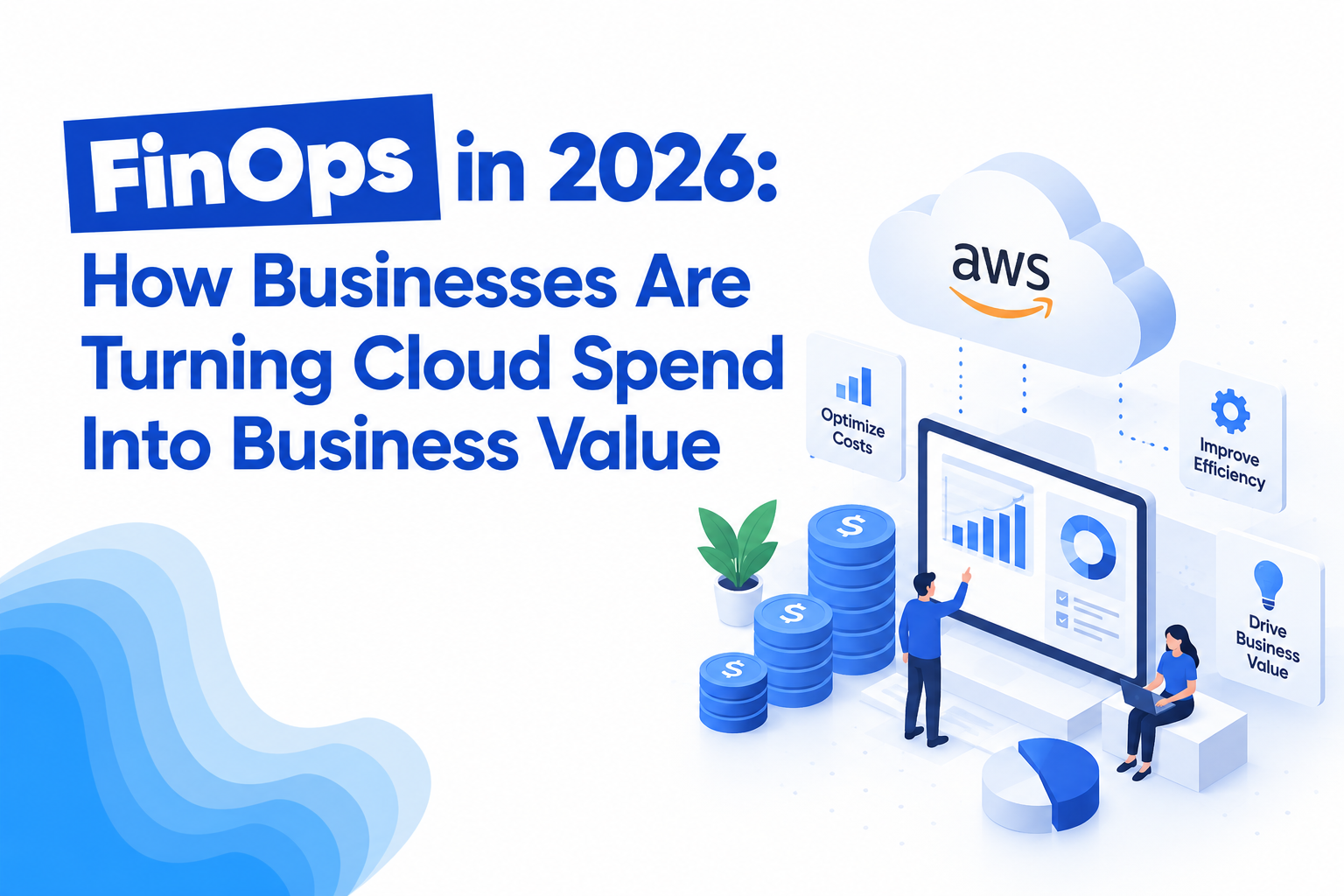
FinOps is simply the practice of managing cloud spending the same way a business manages any other budget, with clear visibility, accountability, and planning.
For a long time, cloud costs were treated as a technical problem that the IT team dealt with quietly. That approach does not work anymore. Cloud bills have grown so large and so complex that finance teams, leadership, and engineering teams all need to be involved in tracking where the money goes.
Here is the real problem many companies face. Teams sign up for cloud resources they need for a short project and forget to turn them off. Departments choose different providers without checking if the company already has a similar service elsewhere. Nobody notices until the monthly bill arrives and it is much higher than expected.
FinOps fixes this by building a habit of checking cloud usage regularly, tagging resources so everyone knows what belongs to which team, and setting up alerts before spending gets out of control. Some companies are also starting to use automated tools that can spot unusual spending patterns and flag them before they become a bigger issue.
This is one of the clearest cloud computing trends 2026 because it affects every business using the cloud, regardless of size or industry. It is not just about saving money. It is about making sure cloud spending actually supports business goals instead of quietly draining the budget.
Multi cloud means using more than one cloud provider at the same time, for example running part of your systems on AWS and another part on Google Cloud or Microsoft Azure.
In the past, this happened mostly by accident. Different teams picked different tools without talking to each other, and the company ended up with a messy mix of services. Now, businesses are choosing multi cloud on purpose, and for good reasons.
Relying on a single provider means you are stuck if prices go up, if there is an outage, or if that provider does not offer the specific tool you need. Spreading workloads across more than one provider gives businesses more flexibility. They can pick the best service for each specific job, negotiate better pricing, and avoid being completely dependent on one company.
The catch is that multi cloud setups are harder to manage. Without proper planning, businesses end up with the same lack of visibility problem that FinOps tries to solve, just spread across multiple platforms instead of one. This is why governance, meaning clear rules about who can use what, how resources are tracked, and how security is enforced across every platform, has become such an important part of cloud strategy this year.
Getting multi cloud right is no longer just a technical choice. It is a strategic one that touches cost, security, and how fast a business can move.
These three trends are connected. AI workloads are pushing up cloud usage and costs. FinOps is the discipline needed to keep that spending under control. Multi cloud is the structure many companies are using to stay flexible while doing all of this.
If your business is still treating cloud infrastructure as something to set up once and forget, this is the year to change that approach. A little planning now can save a lot of confusion and unexpected costs later.
Some practical steps worth considering:
The cloud computing trends 2026 all point in one direction: businesses are moving from simply using the cloud to actually managing it well. AI is becoming easier to access, but it also demands smarter infrastructure planning. FinOps is turning cloud spending into something every team can understand and control. Multi cloud is giving businesses more freedom, as long as it is set up with the right structure behind it.
Staying ahead does not mean chasing every new tool that comes out. It means understanding these shifts, checking where your business currently stands, and making steady improvements. Companies that get this right in 2026 will be in a much stronger position, both in terms of cost and in terms of what they can actually build.
If you are unsure where to start, working with a team that understands cloud architecture, cost management, and multi cloud setups can save you months of trial and error. The goal is not just to keep up with trends, but to build a cloud environment that genuinely works for your business.









 India
India

 Canada
 United Kingdom
 New Zealand
 USA
USA
 UAE
UAE
 SGP
SGP
 Australia
 CALL
NOW
CALL
NOW