

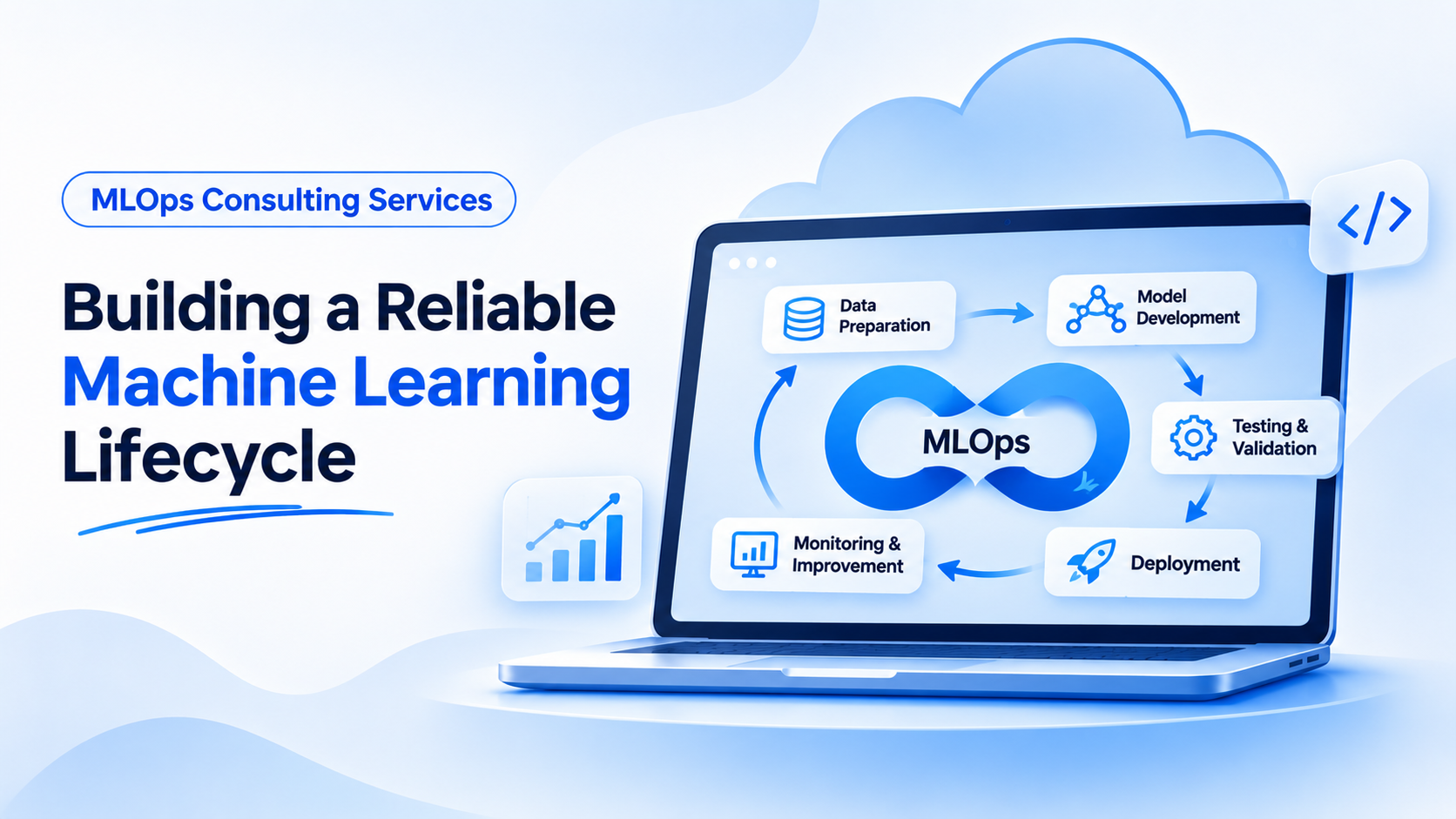
Machine learning projects involve much more than developing a model and checking its accuracy. Businesses also need to prepare data, train models, test results, deploy applications, and monitor performance after release. Each stage requires careful planning. Without a clear process, even a successful machine learning model can become difficult to maintain or unreliable in production.
This is where MLOps consulting services become useful. They help businesses bring development, machine learning, and operations practices together so models can move from experimentation to production in a controlled way. With the right approach, organisations can manage machine learning projects more effectively and build a lifecycle that supports continuous improvement.
Why Do Machine Learning Projects Need a Reliable Lifecycle?
A model may perform well during development but produce different results when it starts working with real-world data. Data can change, user behaviour can shift, and business requirements may evolve. If teams do not monitor these changes, model performance can gradually decline.
A reliable machine learning lifecycle provides a structured way to manage these challenges. It covers the complete journey of a model, from initial planning to deployment and ongoing maintenance.
Without proper lifecycle management, teams may face problems such as:
- Slow model releases: Manual processes can delay testing and deployment.
- Inconsistent results: Different environments may produce different outcomes.
- Limited visibility: Teams may struggle to identify why a model's performance has changed.
- Difficult maintenance: Updating models becomes harder when their development history is unclear.
- Poor collaboration: Data scientists, developers, and operations teams may work separately.
A planned MLOps approach helps address these issues and makes machine learning easier to manage over time.
What Does an MLOps Lifecycle Actually Include?
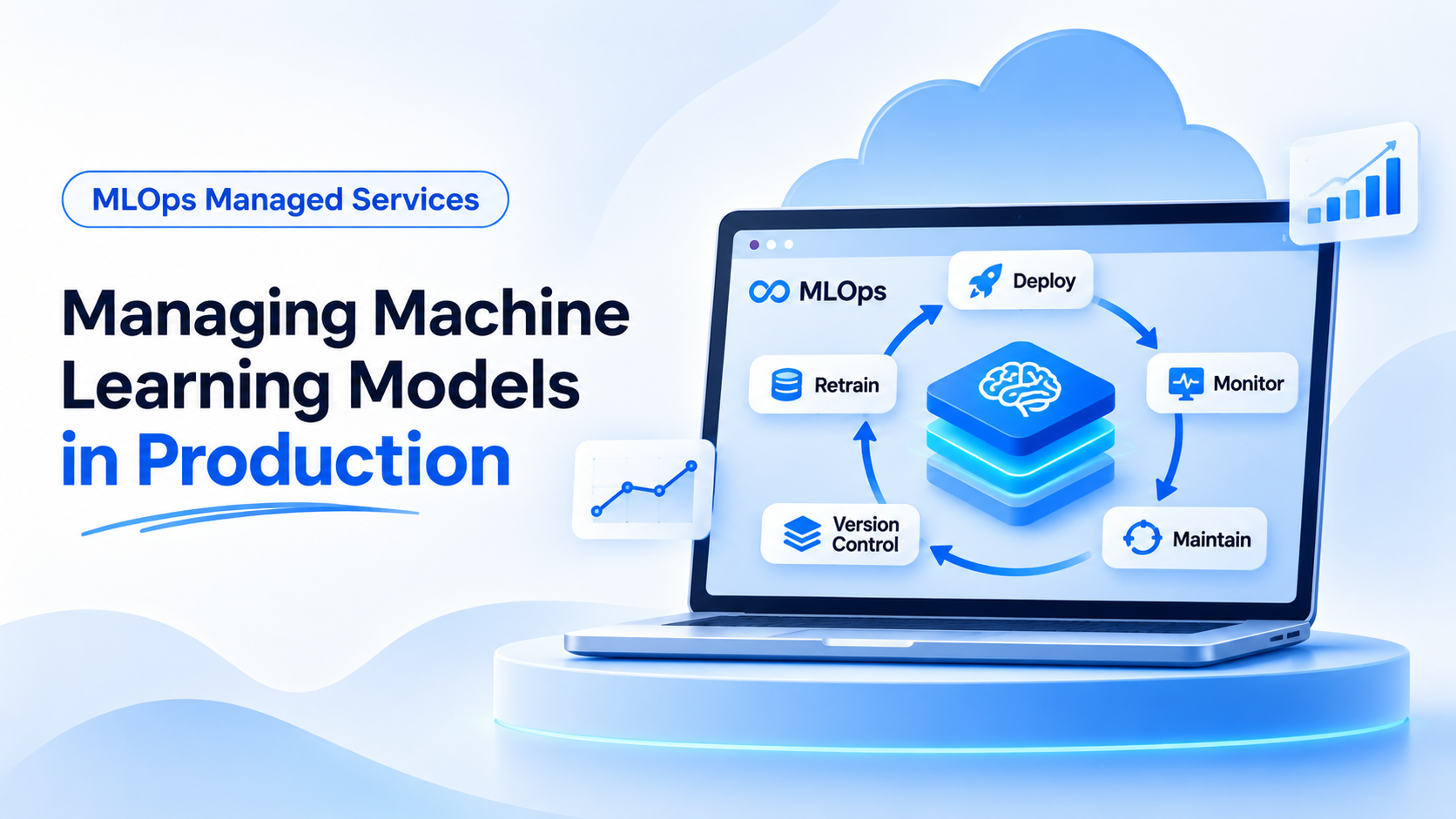
MLOps connects machine learning development with software engineering and operational practices. It gives teams a repeatable process for building, releasing, and maintaining models.
The lifecycle generally includes the following stages.
1. Data Collection and Preparation
Machine learning models depend on the quality of their training data. Teams collect information from relevant sources, remove errors, handle missing values, and prepare datasets for training.
Data preparation also needs to be documented. When teams understand where data comes from and how it has been processed, they can investigate problems more easily.
2. Model Development and Training
Data scientists select suitable algorithms, train models, and compare their results. They may test different datasets, parameters, and techniques before choosing a model that meets the project's requirements.
Keeping track of experiments is important. It helps teams understand which changes improved results and makes it easier to reproduce earlier work.
3. Testing and Validation
Before deployment, a model needs to be tested against suitable datasets and business requirements. Teams should check its accuracy, reliability, and behaviour in different situations.
Testing should not stop after the first successful result. Models need to be checked again when their code, data, or configuration changes.
4. Deployment and Monitoring
Once approved, a model is deployed into the environment where it will be used. Teams then monitor its performance and check whether it continues to produce useful results.
Monitoring helps identify changes in data patterns, prediction quality, and system behaviour. If a model no longer meets expectations, teams can investigate and decide whether it needs adjustment or retraining.
How Can MLOps Consulting Services Improve This Process?
Building an MLOps practice requires more than selecting tools. Businesses need to understand their existing machine learning workflow, identify gaps, and decide how different teams will work together.
Professional MLOps consulting services help organisations plan this process according to their technical environment and business goals.
Assessing the Existing Machine Learning Setup
Consultants review how models are currently developed, tested, deployed, and maintained. They identify manual tasks, repeated work, communication gaps, and areas where the process lacks visibility.
This assessment gives businesses a clearer picture of what needs to change. It also helps prevent unnecessary tool purchases or major changes that do not solve the actual problem.
Creating a Suitable MLOps Strategy
Every organisation has different data sources, workloads, teams, and infrastructure requirements. A startup developing its first recommendation model will not need the same setup as an enterprise managing hundreds of models.
Consultants help define a practical strategy based on factors such as project size, model complexity, existing technology, and future requirements.
Improving Collaboration Between Teams
MLOps works best when data scientists, software developers, data engineers, and operations professionals share responsibility for the model lifecycle.
A defined workflow helps teams understand their responsibilities, share information, and coordinate changes. This reduces confusion when a model moves from development into production.
Planning Automation and Reproducibility
Repeated manual work can make machine learning projects slow and difficult to maintain. An appropriate MLOps setup can introduce automation into suitable stages, including testing, model packaging, and deployment.
Reproducibility is equally important. Teams should be able to understand which data, code, and settings were used to create a particular model version.
Which Tools and Practices Support MLOps?
There is no single tool that manages every part of the machine learning lifecycle. Businesses usually combine different technologies depending on their requirements.
Common areas of an MLOps setup include:
- Version control: Tracks changes to code, configurations, and other project files.
- Experiment tracking: Records model experiments, parameters, and results.
- Pipeline management: Organises repeatable steps for data processing, training, and testing.
- Model registry: Maintains information about model versions and their approval status.
- Deployment practices: Helps teams release models into the required environments.
- Performance monitoring: Tracks model behaviour and identifies changes that need attention.
The right combination depends on the organisation's existing infrastructure and technical goals. Choosing tools before understanding the workflow can create unnecessary complexity. A clear strategy should come first.
How Do You Know When Your Business Needs MLOps Services?
Some businesses start exploring MLOps when their machine learning projects become harder to manage. Others need it before moving their first model into production.
You may benefit from MLOps Services if:
- Your team manages several machine learning models.
- Model deployment involves repeated manual steps.
- Data scientists and engineering teams follow separate workflows.
- You cannot easily reproduce previous model experiments.
- Production models require frequent updates.
- Your organisation needs better visibility into model performance.
These signs suggest that the current process may not support future machine learning requirements. Introducing suitable MLOps practices can help create a more organised working environment.
How Can Goognu Support Your MLOps Journey?
Building a reliable machine learning lifecycle requires a clear understanding of both machine learning workflows and cloud infrastructure. Goognu helps businesses plan their technology requirements and improve the way they manage modern cloud and data environments.
Through its MLOps consulting services, businesses can seek guidance on developing an approach that fits their existing systems, project requirements, and long-term plans. The focus should be on creating a practical lifecycle rather than introducing tools that add unnecessary work.
Whether an organisation is preparing its first production model or reviewing an existing machine learning setup, the right consulting approach can help identify gaps and define the next steps.
To explore technology consulting options, visit Goognu and understand how its services can support your business requirements.
Conclusion
Machine learning success does not end when a model is trained. Businesses need a reliable process to test, deploy, monitor, and maintain models as their data and requirements change.
A well-planned MLOps lifecycle gives teams better control over these activities. With suitable tools, clear responsibilities, and repeatable workflows, organisations can manage machine learning projects with greater confidence. Choosing the right consulting approach helps businesses build a lifecycle that meets their current needs while preparing for future development.
Frequently Asked Questions
1. What are MLOps consulting services?
MLOps consulting services help businesses plan and improve the processes used to develop, test, deploy, and maintain machine learning models. They may include workflow assessment, tool selection, lifecycle planning, and guidance on collaboration between teams.
2. What is the main purpose of MLOps?
The main purpose of MLOps is to make machine learning development and operations more organised and repeatable. It connects model development with deployment and maintenance so teams can manage models throughout their lifecycle.
3. Is MLOps useful for small businesses?
Yes. Small businesses can benefit from MLOps when they begin using machine learning in important business processes. They do not need a complicated setup. A simple workflow for tracking experiments, testing models, and managing deployments can provide a useful starting point.
4. What is the difference between MLOps and DevOps?
DevOps focuses on improving software development and operations. MLOps applies related practices to machine learning projects, where teams must also manage datasets, experiments, model versions, and changes in model performance.
5. Which tools are commonly used in MLOps?
Tools vary according to project requirements. Teams may use platforms for version control, experiment tracking, pipeline management, model registries, deployment, and monitoring. The best selection depends on the existing technology environment.
6. When should a business adopt MLOps?
A business should consider MLOps when it plans to deploy machine learning models into production, manages multiple models, or struggles with manual processes and model maintenance. Starting early can help establish better practices as projects grow.